If you're a small business owner, you're constantly looking for ways to cut through the noise and genuinely connect with your audience. Podcasting isn't just another marketing channel; it's a way to build real authority and forge a personal bond with potential customers. It turns one-way content consumption into a two-way conversation, giving your brand a voice people actually want to listen to.
Why Podcasting Is a Smart Move for Your Business
Still on the fence about whether a podcast is worth the effort? Think about it this way. A social media post is seen for a few seconds. A blog post might be skimmed for a minute or two. A podcast, however, often holds someone's full attention for 30 minutes or more. That's an incredible amount of time to spend with your ideal customer.
This isn't about just pushing a sales pitch. It’s your chance to build legitimate trust. When you consistently share valuable insights, tell compelling stories, and offer your expertise freely, you stop being just another business selling something. You become the go-to resource in your field. That's how you turn listeners into loyal customers who champion your brand.
Build Deeper Customer Connections
There's a unique intimacy to audio that other formats just can't match. When someone tunes into your podcast, they're inviting you into their world—on their commute, during a workout, or while they're winding down for the day. This consistent presence in their ears creates a powerful sense of familiarity.
It’s like having a standing coffee meeting with your best clients every week. You get to share what you know, let your personality shine, and talk about your company's values in a natural, conversational way. This humanizes your brand, making it far more relatable and memorable than a logo or an ad ever could.
Audio is Booming, and Your Audience Is Listening
The sheer size of the podcasting audience is staggering, but it’s their engagement that really matters. As of 2025, there are over 584.1 million podcast listeners worldwide. In the U.S. alone, weekly listeners hit a record 104 million. These aren't casual listeners, either—they tune in for an average of 7 to 8 hours every week.
This isn't just a trend; it's a fundamental shift in how people consume information. They’re actively looking for high-quality audio content that fits into their busy schedules.
By starting a podcast, you're meeting your audience right where they are. You're giving them value in a format they already love and actively seek out, which is a massive advantage in our screen-saturated world.
To dive deeper into a proven strategy, check out an actionable growth playbook for small business podcasting. Many podcasters also amplify their reach by turning their audio into video, and you can learn more about that by weighing the pros and cons of live versus pre-recorded video content.
Building Your Podcast From the Ground Up
Let’s be honest: launching a podcast without a clear plan is a recipe for burnout. It’s like setting sail without a map—you might make some noise for a little while, but you’ll probably end up lost. A truly successful show is built on a solid foundation, and that work starts long before you ever hit the record button.
So, the very first question you need to ask is, "Why are we doing this?"
Get specific. Are you trying to generate qualified leads for your sales team? Maybe you want to build a real community of brand fans, or perhaps your goal is to finally be seen as the go-to expert in your field. Each of these goals demands a completely different approach to your content, format, and how you get the word out.
For example, a show focused on lead generation should probably end each episode with a clear call-to-action for a free demo or consultation. A community-building podcast, on the other hand, would benefit more from listener Q&As and interactive segments. When you know your objective from day one, every single decision you make—from the guests you invite to the topics you cover—serves a real business purpose.
Finding Your Niche and That Unique Angle
The podcasting universe is crowded. But here's the good news: there is always room for a show that serves a specific audience really, really well. Don't just create a generic "marketing podcast." That's too broad.
Instead, narrow it down. Think about something like "Marketing for Independent Coffee Shops" or "Financial Planning for Freelance Creatives." This kind of focus makes it so much easier to attract exactly the right people—your ideal customers.
Once you’ve got your niche, you need a unique angle. What can you bring to the table that nobody else is?
- Your Personal Take: Do you have a contrarian view on a hot topic? Share it.
- An Underserved Audience: Is there a group of people in your industry everyone seems to be ignoring? Speak directly to them.
- A Different Format: Could you deliver your insights in a more compelling way? Maybe through narrative stories or quick, daily tips instead of long interviews.
Take Hannah Isted, the host of The Best Marketing Podcast Ever. She started her show to share her deeper thoughts and, just as importantly, to build relationships with other business owners she wanted to connect with. Her goal wasn't just to broadcast information; it was to start conversations. That alone gave her show a distinct, collaborative feel that helped it stand out.
This is where the magic of podcasting for a small business really happens. It’s how you build a loyal base of listeners who genuinely trust what you have to say.
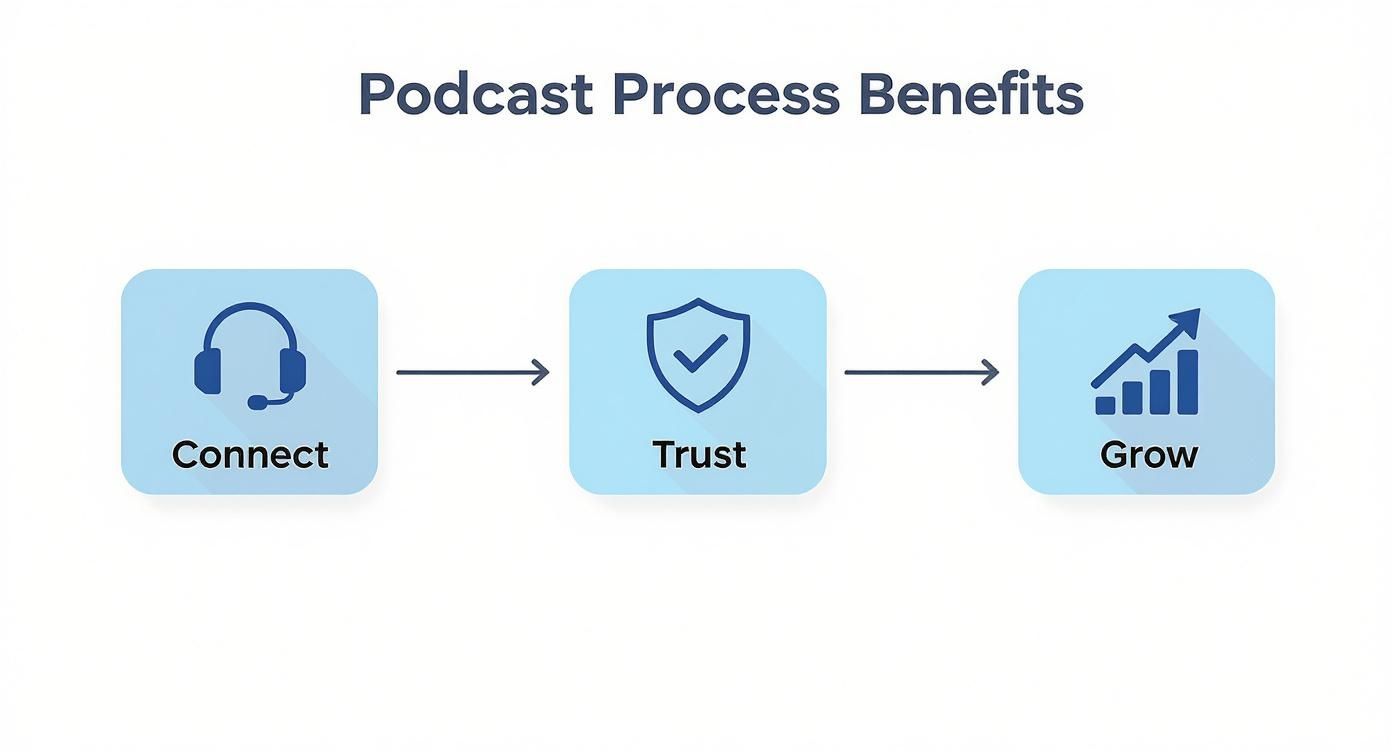
As you can see, it's a simple but powerful flow: connect with people through great content, build trust over time, and that trust is what ultimately fuels your business growth.
Selecting the Right Show Format
Your show's format is its skeleton—it dictates the structure, the vibe, and how much work is involved. There isn't a single "best" option here. The right choice really comes down to your personality, what you can realistically commit to, and what your target audience actually wants to listen to.
To help you decide, let's break down some of the most common formats.
Podcast Format Comparison for Small Businesses
| Format Type | Best For | Pros | Cons |
|---|---|---|---|
| Solo Host | Experts who want to establish deep personal brand authority. | You have full creative control, scheduling is simple, and it builds a strong host-listener bond. | It can be a heavy lift to create all the content alone, and you miss out on conversational energy. |
| Interview | Networking with peers, tapping into guest audiences, and bringing in diverse perspectives. | You get fresh content every episode and great opportunities for cross-promotion. | Requires a lot of research, and scheduling guests can be a real headache. |
| Co-Hosted | Creating a dynamic, fun, and conversational listener experience. | The banter feels natural, you can share the workload, and you can combine different areas of expertise. | You absolutely need good chemistry, and coordinating schedules can get tricky. |
| Narrative/Storytelling | Weaving compelling, immersive stories that totally captivate listeners. | Extremely engaging and memorable. This is how you create "binge-worthy" content. | Incredibly time-intensive. Requires a ton of planning, scripting, and editing. |
A financial advisor, for example, might do great with a solo show where they break down complex money topics into easy-to-understand advice. A marketing agency, however, could really shine with an interview format, bringing on happy clients and industry partners to share their success stories.
Remember, you're not locked into one format forever. Plenty of successful podcasts evolve over time or even blend formats. You could have a primary solo structure but do a monthly interview episode just to mix things up.
Crafting Your Podcast Brand Identity
Okay, so you have a brilliant concept. Now you need to wrap it in a package that makes people want to click "play." Your podcast’s brand identity is all about making a professional and memorable first impression, and it comes down to a few key pieces.
Podcast Name: It has to be memorable and easy to spell. Ideally, it should give a little hint about your show's content or who it's for. Don't get too clever if it makes it hard to find.
Cover Art: This is your visual handshake in a crowded podcast app. It’s worth investing in a professional design that pops and clearly communicates the tone of your show.
Show Description: This is your elevator pitch. In just a few sentences, you need to tell people who the show is for, what you talk about, and why they should bother listening. Make sure to sprinkle in keywords your ideal listener might be searching for.
Think of your podcast as a product you’re putting on a shelf. The name is the brand, the cover art is the packaging, and the description is the sales copy on the back. Nailing these elements is absolutely critical for attracting the right listeners from day one.
Choosing Your Podcasting Tech Stack
Jumping into podcasting can feel like you’re about to buy a ton of complicated, expensive gear. But here’s the good news: you absolutely don’t have to. A professional-sounding show is far more accessible than most people think, and you can get started with a surprisingly lean investment.
The real key is to focus on what actually moves the needle for audio quality. Listeners are incredibly forgiving of many things, but bad audio isn't one of them. Fortunately, getting that clear, crisp sound is less about building a professional studio and more about making smart choices with just a few core pieces of equipment.
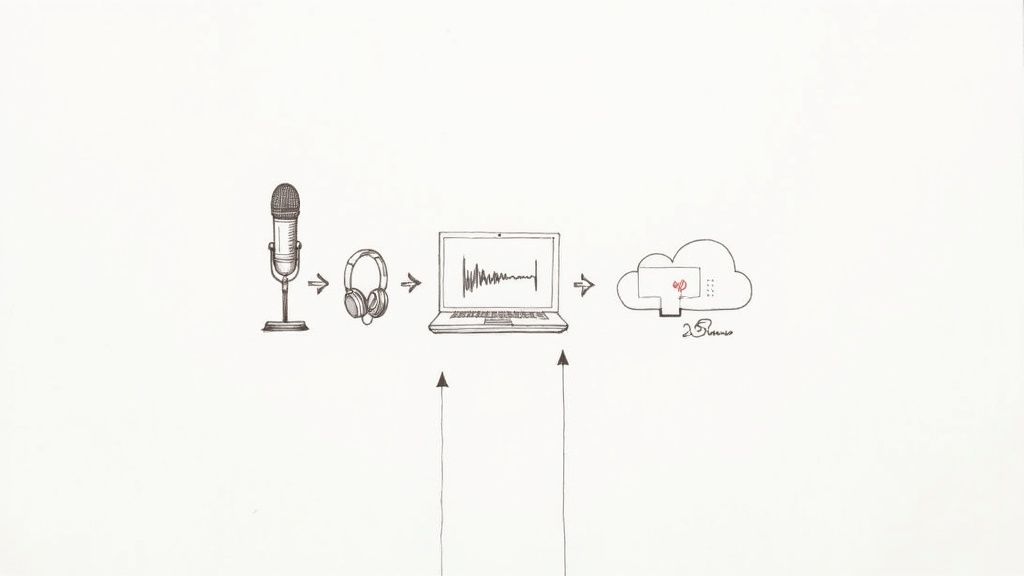
Your First and Most Important Purchase: A Good Microphone
If you're going to spend money anywhere, spend it here. Your microphone is the single most important piece of equipment you will buy. It's the gateway between your voice and your listener's ears, and it's where you'll get the biggest return on your investment. Please, whatever you do, do not rely on your laptop's built-in mic.
When you're starting out, a quality USB microphone is your best friend. They are genuinely plug-and-play, affordable, and deliver excellent audio quality that’s more than enough for a fantastic business podcast.
- Rode NT-USB+: This is a fantastic all-around choice known for its clarity and professional sound. A real workhorse.
- Blue Yeti: It's a classic for a reason. The Yeti is versatile, super user-friendly, and a massive step up from basic audio.
- Audio-Technica AT2020+ USB: This mic delivers studio-quality sound in a simple, direct-to-computer package.
As your show grows, you might eventually consider upgrading to an XLR microphone. These mics require a separate audio interface (a small box that connects the mic to your computer) but offer more control and even better sound quality. Think of this as a path to consider down the road, not a necessity for launching.
A common mistake I see is people overspending on a high-end mic while recording in a terrible-sounding room. A $100 USB mic in a quiet room with a few soft surfaces will always sound better than a $1,000 XLR mic in a noisy, echo-filled kitchen.
Essential Software for Recording and Editing
Once you've got your mic sorted, you need software to capture and polish your audio. The options here range from completely free and powerful to sophisticated tools that can save you hours of work.
For a new podcaster, the goal should be a simple, frustration-free workflow. You don't need a complex digital audio workstation (DAW) with a thousand features you'll never touch. You just need a reliable tool to record, snip out mistakes, and mix in your intro and outro music.
Here are some top choices for small business podcasters:
- Audacity: It's free, open-source, and has been the starting point for countless podcasters for years. While the interface isn't the most modern, it has all the fundamental tools you need to produce a great-sounding show without spending a dime.
- Descript: This one has been a game-changer for so many creators. It transcribes your audio into text, letting you edit your recording simply by editing a text document. Deleting a word or sentence in the text automatically removes it from the audio, which can cut your editing time in half.
- Riverside.fm: If you plan on conducting remote interviews, this is a must-have. It records each person's audio and video locally, so if someone has a choppy internet connection, it won't ruin the final recording quality.
Choosing the right software is just one part of the equation. If you’re also thinking about adding video to your podcast, you can find a complete breakdown of equipment in our guide to building the best streaming setup for your needs.
Don't Forget Podcast Hosting
This is a step newcomers often miss. You don't upload your finished audio files directly to Apple Podcasts or Spotify. Instead, you upload them to a dedicated podcast hosting service. That service then creates the RSS feed that directories like Apple and Spotify use to find and distribute your show. Think of your host as the permanent home for your audio files.
Choosing a reliable host is critical for making sure your show is always available to your listeners. You'll want to look for a platform with solid analytics, easy-to-use features, and a great track record.
Top Hosting Platforms for Small Businesses:
| Platform | Best For | Key Feature |
|---|---|---|
| Buzzsprout | Beginners | An incredibly user-friendly interface and fantastic support. |
| Transistor | Businesses with multiple shows | Lets you host unlimited podcasts on a single account. |
| Captivate | Growth-focused podcasters | Comes with excellent analytics and marketing tools built-in. |
Your tech stack doesn't need to be complicated. By focusing your budget on a quality microphone and choosing user-friendly software and a reliable host, you can build a practical, frustration-free foundation for your small business podcast.
Making Your Episodes Sound Like a Million Bucks
Let’s be honest: you can have the most brilliant ideas in the world, but if your podcast sounds like it was recorded in a tin can, nobody's sticking around. The production phase is where you turn your raw audio into a polished, professional show that people want to listen to. The good news? You don't need a fancy studio. You just need a solid workflow and a bit of know-how.
Getting professional-grade sound really boils down to the basics. It all starts with where you record and ends with a clean, balanced audio file. Nailing this process is what separates a hobbyist podcast from one that establishes you as an authority in your field.
Dialing in Your Recording Space
Forget soundproof booths. Some of the best-sounding podcasts are recorded in regular rooms that have been tweaked just a little. The biggest enemy of clean audio is reverb—that echoey sound you get from your voice bouncing off hard surfaces like walls, desks, and windows.
Your new best friend is a small room packed with soft stuff. Think of a walk-in closet, a small office with a rug, or even a cozy corner of your bedroom. These spaces are natural sound absorbers.
Want to take it up a notch?
- Hang blankets or towels on the walls. It might not look pretty, but it's an incredibly effective and cheap way to kill reverb.
- Toss some pillows or cushions on your desk and the floor around you.
- Stay away from windows. They let in all sorts of outside noise, from traffic to your neighbor's dog.
The goal here is to create a "dead" space where your mic only picks up your voice, not the room's echo. It’s a low-tech trick that delivers a huge improvement, making your audio sound crisp and intimate.
Mastering Your Microphone Technique
Okay, your space is prepped. Now, let’s talk about how you actually use the microphone. Just speaking into it isn't enough; you've got to find the sweet spot.
A great starting point is to position the microphone about 4-6 inches from your mouth. An easy way to measure this is the "hang loose" hand signal—the distance between your thumb and pinky. Get too close, and you'll get a boomy, bass-heavy sound and those harsh "p" and "b" pops (we call those plosives). Too far, and you'll sound distant, and the mic will pick up more room noise.
My Favorite Pro Tip: Don't speak directly into the microphone head-on. Instead, talk slightly across the top of it. This simple adjustment cuts down on plosives dramatically and gives your voice a much smoother, more natural tone.
Consistency is everything. Try to keep the same distance from the mic throughout your recording. It makes your audio levels much more even and will save you a ton of headaches during the editing phase. A simple boom arm is a fantastic investment to help keep that mic locked in the perfect spot.
The Art of a Clean, Punchy Edit
Editing is where the magic really happens. It’s how you polish your raw tracks into a final, listenable episode. This can feel like the most daunting part for newcomers, but a simple, repeatable process makes it a breeze. Your main goals are to cut out mistakes, balance the volume, and add your branding.
Here’s a straightforward editing workflow that works every time:
- The Rough Cut: First, just listen through the whole recording and chop out the obvious flubs—long pauses, verbal stumbles like "ums" and "ahs," or any sentences you want to re-do. Don't stress about perfection yet; just clean up the big stuff.
- Add Your Music and Bumpers: Once the main content is tidy, drop in your intro and outro music. Think of these as the sonic bookends for your show. They create a familiar, professional feel that listeners will come to recognize.
- Level the Audio: This is non-negotiable. You have to make sure the volume is consistent from start to finish. Most editing software has tools like "normalization" or "compression" that can do this for you, bringing up the quiet parts and taming the loud ones so your listeners aren't constantly reaching for the volume knob.
This process will help you produce a great-sounding episode without getting bogged down in the technical weeds. It’s a core part of podcasting for small businesses that truly want to stand out.
And speaking of standing out, a huge trend is taking shape that you can’t afford to ignore. As of 2025, a staggering 41% of listeners actually prefer video podcasts to audio-only. With YouTube becoming the number one platform for podcast discovery, adding a video component could seriously expand your reach. Plus, with 61% of podcasters planning to use AI for editing in 2025, creating video is becoming easier and more affordable than ever. You can dive deeper into the latest podcast statistics and what they mean for you.
Promoting Your Podcast and Growing Your Audience
You’ve done the hard work of creating a fantastic podcast. That's a huge win, but it's really just the starting line. All that brilliant content won't do your business any good if it's sitting in a void. Now comes the fun part: getting it into the ears of people who need to hear it and turning your show into an audience-building engine.
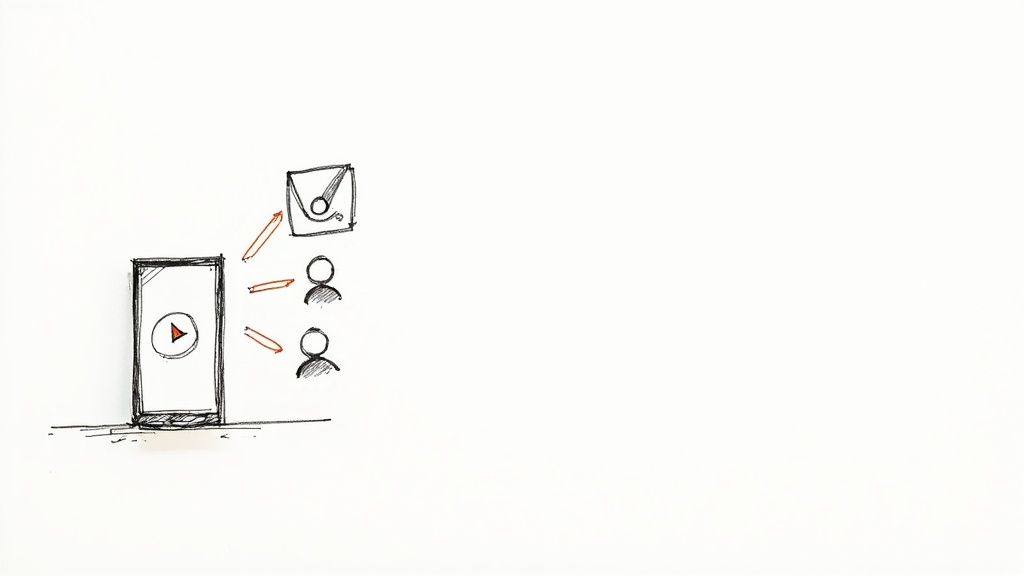
First things first, you need to be everywhere people are listening. Your podcast host gives you an RSS feed—think of it as a unique address for your show. Your job is to submit that feed to all the major podcast directories. It's a simple, one-time setup for each platform, but it’s absolutely critical for getting discovered. Make sure you hit the big three: Apple Podcasts, Spotify, and Google Podcasts.
Start With Your Inner Circle
Before you go hunting for brand new listeners, look at the audience you’ve already earned. Your email list, your social media followers, and your existing customers are your most valuable assets right now. These are people who already know and trust you, making them the most likely to give your podcast a listen and become your first loyal fans.
Send a personal email to your list announcing the show. Explain why you started it and, more importantly, what they'll get out of listening. This initial push is what gives you that first wave of downloads, which can signal to the directory algorithms that your show is worth paying attention to. Don't just announce it once; weave it into your regular newsletter for a few weeks to make sure you catch everyone.
Make Your Content Impossible Not to Share
To grow beyond your current network, you need to make sharing your podcast ridiculously easy and appealing. Just dropping a link to a new episode on social media and hoping for the best is a recipe for being ignored. On visually-driven platforms like Instagram or LinkedIn, you have to create assets that stop the scroll.
This is where you get creative with repurposing. Pull out the best moments from your episodes and turn them into shareable, bite-sized content.
- Audiograms: These are a podcaster's best friend. It’s a static image with an animated sound wave and captions overlaid. They're perfect for highlighting a powerful quote or an "aha" moment.
- Video Clips: If you're already recording video, this is a goldmine. Edit down the most compelling 30-60 second snippets. A guest’s surprising take or a moment of genuine emotion can be incredibly powerful.
- Quote Graphics: Design simple, branded graphics with a memorable quote from the episode. They are super shareable and help build your brand’s visual identity at the same time.
When you create these assets, you're not just promoting an episode; you're giving your listeners the tools to become your marketers. This is a core tenet of podcasting for small businesses looking to get maximum impact from their efforts.
So many people make the mistake of trying to be everywhere at once. Instead, pick one or two social platforms where you know your ideal customers hang out. Get really good at promoting there before you even think about expanding.
Find New Listeners Through Collaboration
One of the most effective ways to grow your audience is to borrow someone else's. Partnering with other creators in your niche gives you a direct line to an established audience that's already interested in what you have to say. It's a warm introduction from a trusted source, not a cold ad.
Look for creators who serve a similar audience without being direct competitors. If your podcast is about social media for local bakeries, you could team up with a creator who teaches food photography.
Smart Ways to Collaborate:
| Tactic | Description | Best For |
|---|---|---|
| Guest Podcasting | You appear as an expert guest on another relevant podcast. | Quickly building authority and reaching a highly engaged, targeted audience. |
| Episode Swaps | You and another host agree to feature one of each other's best episodes in your own feeds. | Giving your audience fresh content while getting a direct promotion to a new one. |
| Joint Ventures | Co-host a webinar or create a guide together that you both promote to your lists. | Building deeper relationships and providing a ton of value to both audiences. |
These kinds of partnerships are a true win-win. Both of you provide great content to your listeners and get your shows in front of a whole new set of potential subscribers.
Tracking What Actually Matters
Finally, you can't know what's working if you're not looking at the data. It's easy to get distracted by vanity metrics, but a few key performance indicators (KPIs) will tell you the real story of your podcast's health and growth.
Your podcast host provides all of this, so get comfortable with your analytics dashboard and keep an eye on these three numbers:
- Downloads per Episode: The industry standard is to measure the downloads an episode gets in its first 30 days. This number is your best indicator of your core, active audience size.
- Listener Retention: How far are people making it through your episodes? High retention rates mean your content is grabbing and holding attention, which is exactly what you want.
- Subscriber Growth: Look at the overall trend of your total subscribers over time. A steady upward curve is the ultimate sign that you’re building a healthy, sustainable show.
Turning Your Podcast Into a Business Asset
A great podcast does more than just get your name out there; it can be a real asset that directly impacts your bottom line. When you stop thinking of your show as just another marketing channel and start treating it like a core business function, you unlock its true potential for generating leads, acquiring customers, and driving real revenue.
This isn't about turning every episode into a hard sales pitch. Far from it. The most successful podcasts for small businesses are the ones that add genuine value first, seamlessly weaving in promotions for their own products or services in a way that feels helpful, not pushy.
Think about it: a software company could wrap up an episode on productivity hacks with a natural mention of how their tool automates those exact processes. Or a business coach could reference their one-on-one sessions as the perfect next step for listeners who want to apply the episode's advice to their own situation.
Direct Monetization Models for Small Businesses
While promoting your own offerings should be the main game, you can absolutely explore other revenue streams that complement your business. These methods can bring in extra income and even strengthen the bond you have with your audience.
Here are a few popular routes:
- Premium Content: This is all about giving your biggest fans more of what they love. You can offer exclusive, ad-free episodes, release content early, or share behind-the-scenes access for a small monthly subscription. It's a fantastic way to reward loyalty and create a predictable income stream.
- Strategic Sponsorships: Forget chasing massive, generic advertisers. Instead, look for partnerships with complementary, non-competing businesses that serve the same people you do. For example, a podcast for freelance writers could team up with an accounting software built for the self-employed. It's a win-win.
- Affiliate Marketing: This is one of the most authentic ways to monetize. Simply recommend products or services you actually use and believe in. When a listener buys something through your unique affiliate link, you get a commission.
You can also get creative with your monetization. A great example is how you can monetize your podcast with early access, which is a powerful way to make your most dedicated listeners feel special.
Proving Your Podcast's ROI
To keep the podcast going, you need to show it’s worth the time and effort. The good news is, the numbers are on your side. Global podcast advertising revenue is on track to hit $4.46 billion in 2025, and nearly half of all podcasters are already earning at least $1,000 per month. Host-read ads are especially powerful because they feel like a natural part of the conversation, building on the trust you've already established. To see more data on this trend, you can discover more insights about podcasting for SMEs on netzoll.com.
For a small business, the ultimate measure of a podcast’s success isn't just about download counts. It’s about qualified leads and new customers. When you consistently deliver value and weave in subtle calls-to-action, your show transforms from a creative hobby into a reliable engine for growth.
And don't forget, your podcast episodes are incredibly valuable content assets. You can learn more about how to get the most out of every recording by exploring different content repurposing strategies that can extend their reach across all your marketing platforms. This approach ensures every minute you spend creating content works harder for your business.
At Pre-recorded LiveStream, we help you turn your polished podcast episodes into engaging live events without the stress. Broadcast your pre-recorded video podcasts to multiple platforms simultaneously, engage with your audience in real-time chat, and build a loyal community. See how easy it is to deliver flawless live experiences at https://prerecordedlivestream.com.