
You’ve meticulously edited your video, crafted the perfect thumbnail, and written a compelling title. But hitting 'Publish' at the wrong moment can send your hard work straight into the digital void, unseen by the very audience you created it for. The first few hours of a video's life are critical; they send powerful signals to the YouTube algorithm about its quality and relevance. Posting when your audience is most active and engaged can trigger a cascade of initial views, shares, and recommendations that fuel long-term growth.
Finding that perfect window isn't just guesswork, it's a science backed by data. To maximize your reach and views, a crucial factor is knowing the best time to upload YouTube videos, a strategy that significantly impacts your content's initial visibility. Generic advice like "post in the afternoon" no longer cuts it. Every channel's audience is unique, and your upload schedule should reflect that.
This guide moves beyond one-size-fits-all suggestions to provide nine data-backed strategies that pinpoint the best time to post YouTube videos for your specific situation. We will dissect specific windows, from leveraging weekday prime time to mastering timezone-optimized schedules for a global audience. Whether you're a streamer, a brand, or an educator, these actionable tactics will equip you to launch your content for maximum impact, ensuring your videos get the immediate traction they need to succeed.
1. Weekday Prime Time (3 PM - 6 PM)
One of the most reliable and widely adopted strategies for determining the best time to post YouTube videos is to target the weekday afternoon window. This "prime time" slot, typically between 3 PM and 6 PM in your audience's local time zone, capitalizes on a predictable shift in daily routines. As the workday and school day wind down, viewers begin to seek out content for relaxation, entertainment, or education.
Publishing your video during this period ensures it's fresh and waiting for them as they take their first break. The peak within this window often falls between 4 PM and 5 PM, when people are actively transitioning from work or study to leisure time. This strategy is particularly effective because it aligns directly with a natural increase in viewership, giving your content an immediate boost in visibility and initial engagement, which can positively influence YouTube's algorithm.
Why This Time Works
The logic is simple: you are meeting your audience where they are, right when they become available. Creators like Business Insider often leverage the 3-4 PM slot to drop timely news analysis, catching professionals as they wrap up their tasks. Similarly, educational channels like Khan Academy find success by posting tutorials in the afternoon, providing homework help just when students need it. For those in the professional development space, such as LinkedIn creators, this window is perfect for sharing career advice that viewers can immediately apply.
How to Implement This Strategy
To effectively use the weekday prime time, a data-driven approach is essential. Don't just guess; use YouTube's tools to confirm the ideal moment for your specific viewers.
- Test and Measure: Schedule your posts at different times within this window. Try 3 PM one week, 4 PM the next, and 5 PM after that. Compare the "first 24 hours" performance for each video to pinpoint your channel's sweet spot.
- Use Your Analytics: Navigate to the "Audience" tab in your YouTube Studio. The "When your viewers are on YouTube" report is a powerful tool that shows the exact days and hours your audience is most active. Align your posting schedule with these peak times.
- Schedule in Advance: Use YouTube's built-in scheduler to have your content go live at the precise minute you've identified, even if you can't be online yourself. This consistency helps build audience expectations. You can find more information about how to get your videos ready for publication by learning how to optimize video for YouTube.
2. Tuesday Through Thursday Strategy
While specific times matter, the day you post is equally crucial. The Tuesday through Thursday strategy focuses on publishing during the mid-week period, a time that data consistently shows has higher viewer engagement. Unlike Mondays, which are often hectic catch-up days, and Fridays, when people begin to disconnect for the weekend, the middle of the week represents a stable routine where viewers actively seek content breaks.
This approach leverages the "mid-week phenomenon" where audiences have settled into their work or school rhythm and use YouTube as a go-to source for entertainment, learning, or a mental reset. Posting on these days means your video lands in front of a more focused and receptive audience, increasing the likelihood of longer watch times and more meaningful engagement, which are strong positive signals for the YouTube algorithm.
Why This Time Works
The logic behind this strategy is that viewer habits are more consistent and predictable from Tuesday to Thursday. People are looking for content to watch during lunch breaks, commutes, or in the evening after their primary obligations are met. For example, megastar creator MrBeast often schedules his high-production videos for mid-week releases to maximize initial impact. Similarly, educational channels like TED-Ed and Vsauce frequently use a Tuesday or Thursday publishing schedule to align with peak learning and curiosity mindsets during the core of the week.
How to Implement This Strategy
To make the most of the mid-week window, you need to be deliberate and consistent. This isn't just about picking a day, but building a reliable presence when your audience is most available.
- Create a Content Calendar: Designate Tuesday, Wednesday, or Thursday as your primary upload day and stick to it. This consistency trains your audience to anticipate new content from you on that specific day.
- Analyze Day-Specific Performance: Dive into your YouTube Studio analytics. Under the "Audience" tab, review which days of the week historically generate the most views and engagement for your channel. Let this data guide your choice between Tuesday, Wednesday, or Thursday.
- Build a Content Buffer: To avoid missing a mid-week post, always have one or two videos fully edited and ready to go. This buffer ensures you can maintain your schedule even during busy weeks, reinforcing your channel's reliability.
- Combine Days for Sustained Engagement: Try a two-part content strategy. For instance, release a main video on Tuesday and follow it up with a related Short, community post, or short live stream on Thursday to keep the conversation going and drive viewers back to the main content.
3. Morning Release Strategy (8 AM - 10 AM)
Another powerful approach for determining the best time to post YouTube videos is the early morning release. Publishing between 8 AM and 10 AM in your audience's local time zone allows you to capture viewers during their morning routines. This strategy targets people checking their phones over breakfast, commuters on public transport, and students before classes begin.
By going live early, your video has the entire day to accumulate views, likes, and comments. This initial momentum can be a crucial signal to the YouTube algorithm, encouraging it to promote your content to a wider audience as the day progresses. The video is indexed and ready to be served to viewers during the later afternoon peak, giving it a distinct advantage over content published at that time.
Why This Time Works
The morning release strategy is built on the idea of getting ahead of the curve. It meets viewers in the first pockets of free time they have in their day. Tech news channels like The Verge often drop their daily briefings around 8 AM EST, catching their audience before the workday starts. Similarly, financial news outlets such as CNBC release market updates early to inform investors. This time is also perfect for creators with international audiences, as an early morning post in one major time zone can align with evening viewing in another.
How to Implement This Strategy
To make the most of an early morning slot, preparation and precise timing are key. You need to ensure everything is ready to go for maximum impact right at the start of the day.
- Schedule the Night Before: Use YouTube's scheduler to set your video to go live at your chosen time. This removes the stress of a manual morning upload and ensures punctuality. Prepare your title, description, tags, and custom thumbnail in advance.
- Coordinate Promotion: Don't just rely on YouTube notifications. Have your promotional posts for social media, like Twitter or Instagram, and your email newsletter ready to go out at the exact moment the video is published. This creates an immediate traffic spike.
- Monitor Early Engagement: Keep a close eye on your analytics for the first two hours after publishing. This initial data on view velocity and audience retention is often a strong predictor of the video's overall performance for the day.
4. Evening Prime Time (6 PM - 10 PM)
Another highly effective strategy for determining the best time to post YouTube videos is to target the evening hours. This prime time window, typically from 6 PM to 10 PM in your audience's local time zone, captures viewers after they have finished their daily commitments like work, dinner, and household chores. It’s when people actively sit down to relax and consume longer-form content.
Publishing during this period places your video directly in front of an audience ready for an extended viewing session. Unlike the afternoon rush, evening viewers are often less distracted and more willing to engage deeply with content. This is the peak entertainment window, and your video can become a core part of their nightly unwinding routine, leading to higher watch times and session duration.

Why This Time Works
The logic behind this window is capturing peak leisure time. You are meeting viewers when they have the most uninterrupted time to dedicate to YouTube. Gaming channels like Linus Tech Tips often release detailed tech reviews in the evening, catering to enthusiasts who want to dive deep. Similarly, late-night show channels upload clips between 7 PM and 9 PM to catch viewers looking for a quick laugh before bed, capitalizing on the "second screen" phenomenon where people watch YouTube while TV is on.
How to Implement This Strategy
To maximize your impact during the competitive evening hours, you need a focused and engaging approach. Standing out is key when everyone is trying to capture the same relaxed audience.
- Create 'Binge-Worthy' Content: Structure your videos as part of a series or playlist. When viewers finish one, YouTube is more likely to recommend the next, extending their watch session on your channel.
- Use YouTube Premieres: Schedule your video to premiere between 7 PM and 8 PM. This creates a live event, allowing you to engage with your audience in real-time chat, which boosts initial velocity and community feeling.
- Optimize Your Thumbnails: The evening feed is crowded. Your thumbnail and title must be compelling enough to grab attention instantly. Use bold colors, clear faces, and intriguing text to stand out from the competition.
- Engage on the Community Tab: If you're not posting a video, use the Community Tab during these peak hours to share polls, behind-the-scenes photos, or updates to keep your channel top-of-mind.
5. Weekend Upload Strategy (Friday Evening/Saturday Morning)
While weekdays are often dominated by shorter, more frequent content, the weekend provides a unique opportunity for creators to capture a relaxed and engaged audience. The weekend upload strategy involves publishing content on Friday evening (6 PM - 10 PM) or Saturday morning (9 AM - 11 AM) to align with increased leisure time, when viewers are actively seeking longer, more immersive content to enjoy.
This approach capitalizes on the end-of-week mindset. A Friday evening release catches viewers as they unwind, while a Saturday morning post targets those starting their day with content consumption. This makes it a prime window for publishing your most substantial videos, as audiences have the extended time to dedicate to them, which is a key factor in determining the best time to post YouTube videos for longer formats.
Why This Time Works
The logic behind this strategy is leveraging audience availability for deep-engagement content. Viewers are not constrained by work or school schedules and are more likely to watch a full-length documentary, an in-depth podcast, or a detailed gaming walkthrough. Channels like Joe Rogan often release long-form podcast episodes over the weekend, knowing their audience will dedicate hours to listening. Similarly, documentary channels and gaming creators find massive success by dropping their tentpole content on Friday nights or Saturday mornings, turning a single upload into a weekend event.
How to Implement This Strategy
Successfully using the weekend window requires aligning your content format with audience expectations for leisure time.
- Reserve for High-Value Content: Save your longest, highest-production value videos for these slots. This could include deep-dive tutorials, feature-length vlogs, or comprehensive compilations that reward a longer watch time.
- Build Anticipation: Use your weekday content and social media channels to promote your upcoming weekend release. Create a sense of excitement to ensure viewers are ready and waiting when the video drops.
- Analyze Weekend Analytics: Check your YouTube Studio "Audience" report specifically for weekend traffic patterns. See if your viewers are more active on Friday night or Saturday morning and tailor your schedule accordingly. This data is also crucial when considering the best time to stream on YouTube, which you can learn more about.
6. Timezone-Optimized Multi-Time Publishing
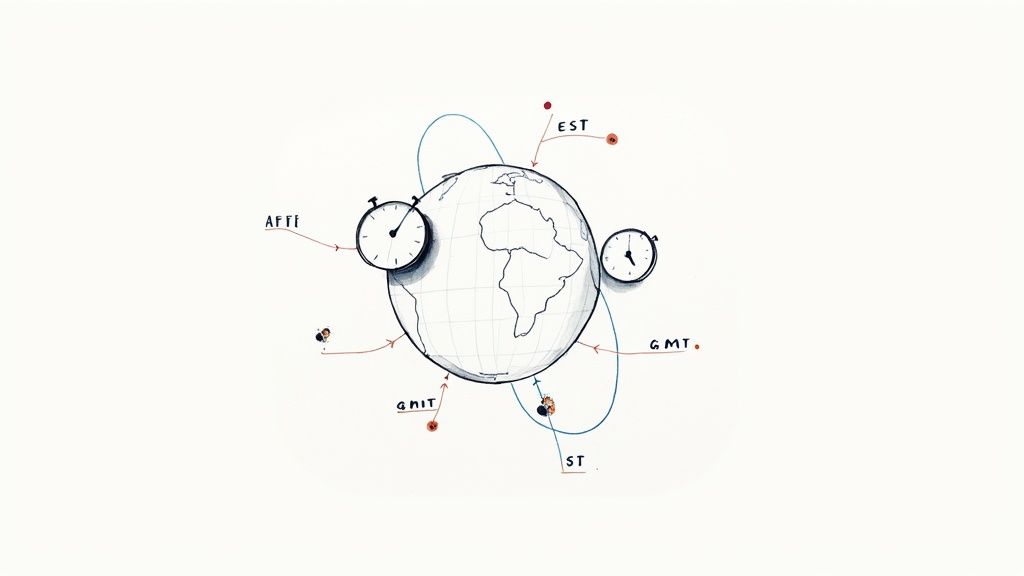
For channels with a significant international audience, a single upload time is insufficient. Timezone-optimized multi-time publishing is an advanced strategy where you release content strategically to align with peak viewing hours across multiple major time zones, such as EST, GMT, and JST. Instead of one post hoping to catch a global wave, this method involves staggering uploads to meet different geographic segments precisely when they are most active.
This approach maximizes global reach by ensuring your content feels new and relevant to viewers in North America, Europe, and Asia as their respective prime times arrive. It acknowledges that the best time to post YouTube videos is not a single point on the clock but a rolling window that follows the sun. By catering to each region's schedule, you can dramatically increase initial engagement and visibility worldwide.
Why This Time Works
This strategy is built on the principle of localized prime time. A 4 PM EST release is 9 PM in London and 1 AM in Mumbai, missing the peak for European and South Asian viewers. Global brands and media outlets excel at this. For example, 24-hour news channels like BBC News often employ a timezone-staggered strategy for their digital content, pushing major stories to align with morning commutes in different continents. Similarly, international music labels frequently premiere music videos at different times to capture fanbases in the Americas, Europe, and Asia Pacific separately.
How to Implement This Strategy
Successfully deploying this strategy requires precision planning and a deep understanding of your audience's geographic distribution.
- Analyze Geographic Data: Go to the "Audience" tab in YouTube Studio and select "Geography." Identify your top 3-5 countries or regions. Note their corresponding time zones to establish your target publishing windows.
- Schedule for Successive Peaks: Plan your uploads to hit the afternoon or evening prime time in each key region. A common pattern is scheduling posts at 8-12 hour intervals. For instance, you could post at 8 AM GMT (for Europe/Africa), then 4 PM EST (for the Americas), and 8 PM JST (for Asia).
- Use YouTube Premieres: Schedule your video as a "Premiere" for each target time zone. This builds anticipation with a shareable watch page and a live chat, creating an event-like atmosphere that boosts initial viewership.
- Leverage Scheduling Tools: To manage this complexity, especially if you want to push your content across multiple platforms, dedicated tools are a must. You can learn more about how to streamline multi-platform scheduling to ensure your content goes live at the perfect moment in every region.
7. Seasonal and Event-Based Timing
A highly strategic approach to determining the best time to post YouTube videos involves aligning your content with specific seasons, holidays, or major cultural events. Instead of focusing solely on the hour of the day, this method leverages predictable spikes in audience interest and search volume tied to real-world happenings. By timing your video releases to these moments, you tap into a highly engaged and motivated audience actively seeking relevant content.
This strategy is about proactive planning, creating content that serves an existing, time-sensitive demand. Your video becomes part of a larger conversation, whether it’s a holiday celebration, a new product launch, or a trending topic. Publishing during these peak relevance windows ensures your content is not just seen but is also timely, dramatically increasing its initial velocity and potential to be shared.
Why This Time Works
This method is effective because it capitalizes on external drivers of viewership. You aren't just hoping your audience is online; you are publishing content they are already searching for. For example, DIY and craft channels see massive success by releasing holiday-themed projects in October and November. Similarly, tech reviewers strategically drop "best Black Friday deals" videos just before the shopping event, while finance creators publish tax-prep guides in January to meet peak demand. This alignment with consumer behavior gives your video an inherent advantage.
How to Implement This Strategy
Successfully leveraging seasonal and event-based timing requires foresight and organization. It's less about a specific time of day and more about a specific time of year.
- Create an Editorial Calendar: Plan your content 6 to 12 months in advance. Identify major holidays, seasons, and industry-specific events relevant to your niche and schedule content ideas around them.
- Research Keyword Trends: Use tools like Google Trends to analyze when search interest for your chosen topics peaks. For instance, searches for "back-to-school outfits" surge in late July and August.
- Schedule for Peak Relevance: Aim to publish your content one to two weeks before the actual event or holiday. This gives the YouTube algorithm enough time to index your video and for it to gain traction just as audience interest reaches its zenith.
- Prepare Evergreen Versions: When possible, create a version of your seasonal content that can remain relevant year-round. A video on "Holiday Budgeting Tips" can be repurposed as "Smart Budgeting Tips for Any Occasion."
8. Consistency-First Daily Publishing Model
While many strategies focus on finding the perfect hour, the consistency-first model argues that the habit you build is more powerful than the specific time you post. This approach involves publishing a video at the exact same time every single day, training both the YouTube algorithm and your audience to anticipate your content. It shifts the focus from optimizing for a specific window to creating an unbreakable viewer routine.
By establishing a predictable schedule, such as 5 PM every day, you turn your channel into a reliable source of daily content. Viewers learn to check for your new video as part of their daily habit, similar to tuning into a favorite TV show. This method prioritizes long-term audience loyalty and algorithmic trust over short-term viewership spikes, making it a powerful strategy for determining the best time to post YouTube videos.
Why This Time Works
The power of this model lies in its predictability. When your subscribers know a new video is coming at a set time, they are more likely to engage with it immediately upon release, sending strong positive signals to the algorithm. News channels and morning show hosts have used this principle for decades. On YouTube, creators like The Daily Stoic publish at 8 AM daily, conditioning their audience to start their day with their content. Similarly, Casey Neistat famously built his vlogging empire on a relentless daily schedule, making his uploads a must-see event for his followers.
How to Implement This Strategy
Successfully adopting a daily publishing model requires significant planning and commitment. It’s a marathon, not a sprint, and preparation is key.
- Build a Content Buffer: Before you begin, create and finish a backlog of videos. Aim to have a 2-3 month buffer of scheduled content to avoid burnout and maintain consistency even when life gets busy.
- Use Batch Production: Film and edit multiple videos in a single session. This "batching" method is far more efficient than creating one video from start to finish each day and is essential for a sustainable daily schedule.
- Automate with Schedulers: Use YouTube's native scheduler or third-party tools to set your videos to go live automatically. This ensures your content publishes at the precise time every day without fail.
- Start Small: If daily posting seems too daunting, begin by applying this consistency model to a 3-4 times per week schedule. Once you have a streamlined workflow, you can scale up to daily uploads.
9. Premiere and Scheduled Release Strategy
Instead of simply uploading your video, using YouTube's Premiere feature transforms your new content release into a live event. This strategy involves scheduling your video to go live at a specific time, complete with a public watch page and live chat. It creates a sense of occasion and urgency, encouraging your audience to tune in at the exact moment your video drops, much like a movie premiere.
This approach builds anticipation and centralizes initial viewership into a single, high-engagement window. By treating your upload as an event, you can interact with your community in real-time as they watch for the first time. This concentrated burst of activity, including comments and likes, can send strong positive signals to the YouTube algorithm, potentially boosting your video's reach long after the premiere ends.
Why This Time Works
The power of a Premiere is in its ability to generate a highly engaged, captive audience at a predetermined time. It combines the polish of a pre-recorded video with the interactive energy of a live stream. Game developers often use Premieres to debut new trailers, creating massive hype. Similarly, creators like MrBeast frequently premiere their high-stakes videos, using the live chat to fuel excitement and immediate feedback from millions of viewers. For musicians, it's the perfect way to launch a new music video, allowing them to connect directly with fans during the first listen.
How to Implement This Strategy
To maximize the impact of a YouTube Premiere, you need to promote it and manage the event effectively. This turns the question from "what is the best time to post YouTube videos" into "what is the best time to host a live viewing event."
- Promote Heavily: Schedule your Premiere at least a few days to a week in advance. Announce the date and time across all your social media platforms to build a crowd. Use YouTube's "Trailer" feature to give viewers a sneak peek.
- Engage Actively: Be present in the live chat at least 5-10 minutes before the video starts and stay throughout the entire duration. Answer questions, react to comments, and thank viewers for tuning in. This direct interaction is the main draw of a Premiere.
- Use Your Analytics: Schedule the Premiere during your audience's peak activity hours, which you can find in the "Audience" tab of your YouTube Studio. This ensures the maximum number of your subscribers will be online and able to join the event live.
9-Point YouTube Posting Time Comparison
| Strategy | Implementation Complexity 🔄 | Resource Requirements ⚡ | Expected Outcomes ⭐📊 | Ideal Use Cases 💡 | Key Advantages |
|---|---|---|---|---|---|
| Weekday Prime Time (3 PM - 6 PM) | Medium 🔄 — timezone-aware scheduling | Low–Medium ⚡ — regular uploads + analytics | High ⭐📊 — strong engagement, extends into evenings | Professional, educational, news, commuter audiences | Captures afternoon breaks; consistent daily traffic |
| Tuesday–Thursday Strategy | Low–Medium 🔄 — pick mid-week slots | Medium ⚡ — steady weekly production | Very High ⭐📊 — statistically higher engagement & reach | Series, educational channels, consistent-content creators | Algorithm favors mid-week; predictable interaction |
| Morning Release (8 AM - 10 AM) | Medium 🔄 — early scheduling, timezone prep | Medium ⚡ — night-before readiness, monitoring | High ⭐📊 — all-day momentum; good international reach | News, tech updates, commuter-focused, global audiences | Early engagement boosts algorithm traction |
| Evening Prime Time (6 PM - 10 PM) | Medium 🔄 — heavy competition, promotion needed | Medium–High ⚡ — higher production/thumbnail quality | Very High ⭐📊 — peak watch time & longer session durations | Entertainment, gaming, vlogs, lifestyle | Longer watch sessions; strong engagement metrics |
| Weekend Upload (Fri evening / Sat morning) | Low 🔄 — simple timing choice | Medium ⚡ — favors longer-form content | Medium ⭐📊 — extended sessions but fewer active viewers | Podcasts, long-form interviews, documentaries | Less weekday competition; binge potential |
| Timezone-Optimized Multi-Time Publishing | High 🔄 — complex staggered schedule | High ⚡ — multiple uploads, localization work | High ⭐📊 — 24‑hour engagement; increased global views | Global brands, music labels, international creators | Maximizes reach across regions; multiple ranking windows |
| Seasonal & Event-Based Timing | High 🔄 — long-term editorial planning | High ⚡ — advance production & content buffer | Very High ⭐📊 — massive seasonal search & intent | Holiday guides, product launches, event-driven content | High organic reach during peaks; strong viewer intent |
| Consistency-First Daily Model | High 🔄 — strict daily cadence, fragile | Very High ⚡ — continual production, batching needed | High ⭐📊 — algorithm favor, habit formation | Daily shows, news, vlogs aiming for habitual viewers | Builds loyalty and predictable daily traffic |
| Premiere & Scheduled Releases | Medium 🔄 — schedule + live engagement prep | Medium ⚡ — creator availability & promotion | High ⭐📊 — higher initial engagement via live chat | Trailers, special releases, music drops, event content | Event-like anticipation; strong community interaction |
From Theory to Practice: Building Your Perfect YouTube Schedule
We’ve explored a comprehensive suite of strategies, from the conventional wisdom of weekday prime time to the nuanced tactics of seasonal timing and multi-timezone publishing. It should now be abundantly clear that the search for the single "best time to post YouTube videos" is a fool's errand. There is no universal magic hour that guarantees viral success for every creator. Instead, the optimal time is a dynamic, personalized target found at the intersection of your unique content, your audience's digital habits, and your channel's specific goals.
The journey from understanding these theories to implementing them in practice is where true growth happens. Your mission now is to transform from a passive content publisher into an active data-driven strategist. The generic advice stops here; your channel’s unique blueprint begins with deliberate, methodical testing.
Your Actionable Roadmap to Optimized Scheduling
The insights from this guide are not meant to be a rigid rulebook but rather a strategic playbook. Your next steps should involve a cycle of hypothesizing, testing, and analyzing.
Establish Your Baseline: Your first port of call is always your YouTube Analytics dashboard. The "When your viewers are on YouTube" report is your foundational data. This isn't the final answer, but it's the most logical starting point. Identify the darkest purple bars, which indicate peak viewer activity, and use these times as your initial test slots.
Select and Test Two Core Strategies: Don't try to implement everything at once. Choose one or two strategies from our list that best align with your content and suspected audience behavior. If you run a gaming channel targeting a younger audience, the Weekend Upload Strategy might be a perfect fit. If your content is educational or business-focused, testing the Morning Release Strategy (8 AM - 10 AM) could capture viewers before their workday gets chaotic.
Document Everything Meticulously: Create a simple spreadsheet to track your experiments. Note the day, time, video title, and key performance indicators (KPIs). The most critical metrics to monitor in the initial upload window are views and click-through rate (CTR) at the 2-hour, 24-hour, and 7-day marks. This data will reveal patterns that analytics alone might not show.
Beyond Long-Form: A Holistic Content Strategy
As you refine your schedule for traditional videos, remember that YouTube's ecosystem is multifaceted. The viewing habits for Shorts can differ significantly from long-form content, often driven by quick mobile sessions during commutes or breaks. To build a truly optimized channel, consider a parallel strategy for your short-form content. When refining your overall publishing strategy, exploring dedicated insights on the best times to post on YouTube Shorts can offer valuable, format-specific guidance. Integrating these timings can create a powerful, dual-pronged approach to maximizing reach across your entire channel.
The Power of Automation and Precision
For creators aiming for global reach or those with demanding schedules, manually hitting the perfect posting time for every timezone is impractical. This is where strategic tools become essential. Using a scheduled premiere or a dedicated streaming platform allows you to automate your release for maximum impact without being tied to your desk.
Key Takeaway: The ultimate goal is not just to find the best time, but to build a reliable, predictable system. A system where your audience expects your content at a certain time, turning passive viewers into a loyal, engaged community that anticipates every upload.
Ultimately, mastering your YouTube schedule is an ongoing process of refinement. The best time to post YouTube videos today might shift next quarter as your audience grows and platform trends evolve. Stay curious, stay analytical, and never stop testing. By embracing this mindset, you transform scheduling from a simple checklist item into one of the most powerful strategic levers for your channel's success.
Ready to hit your perfect time slot, every time, without the stress of live broadcasting? Use Pre-recorded LiveStream to schedule your polished videos as flawless live events, engaging your community in real-time chat while your content runs automatically. Try Pre-recorded LiveStream today to perfect your publishing strategy.